
Buy On Google PlayGet Audiobook VersionRead Sample
Why this matters: you use NLP every single day in search, autocorrect, spam filters and voice assistants, but most guides either drown you in Python or give you a dictionary definition that does not stick.
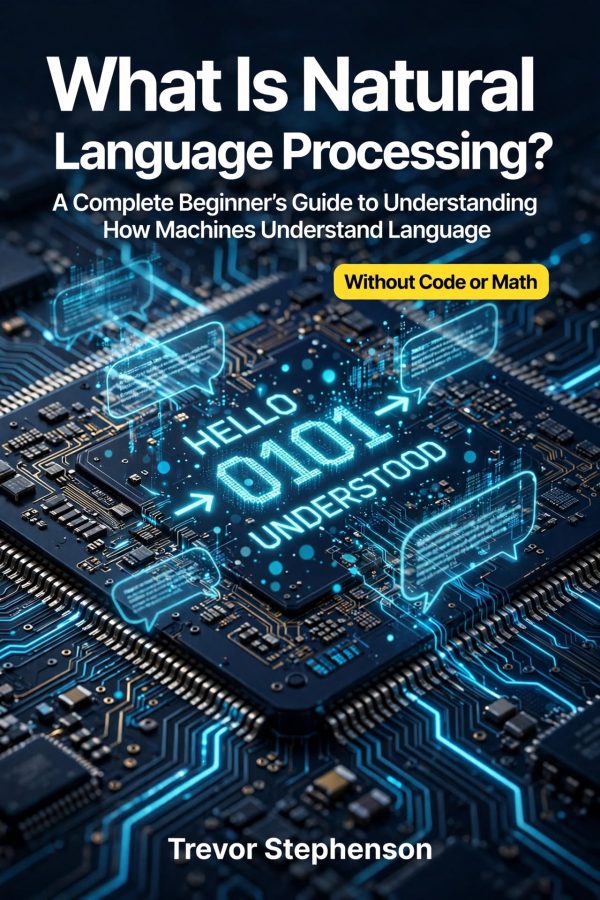
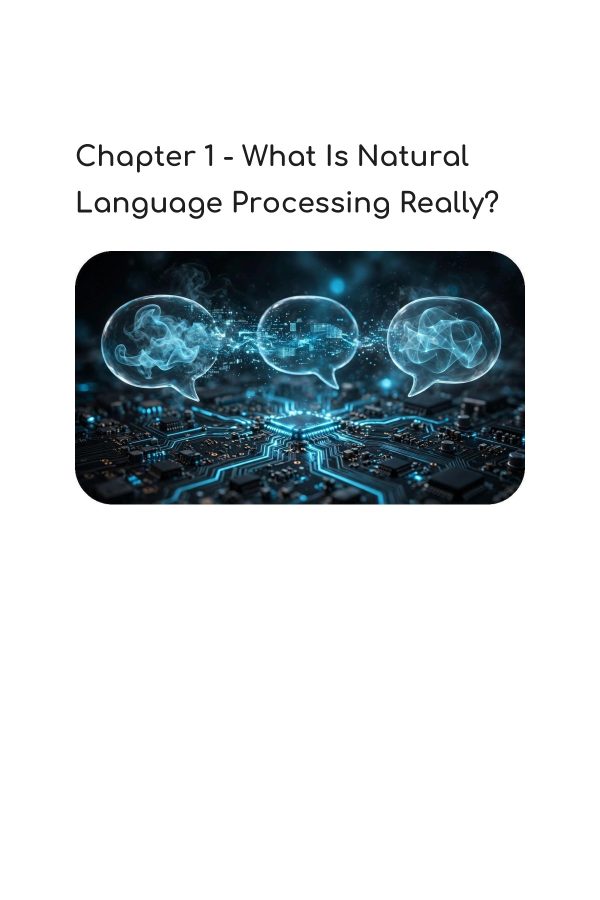
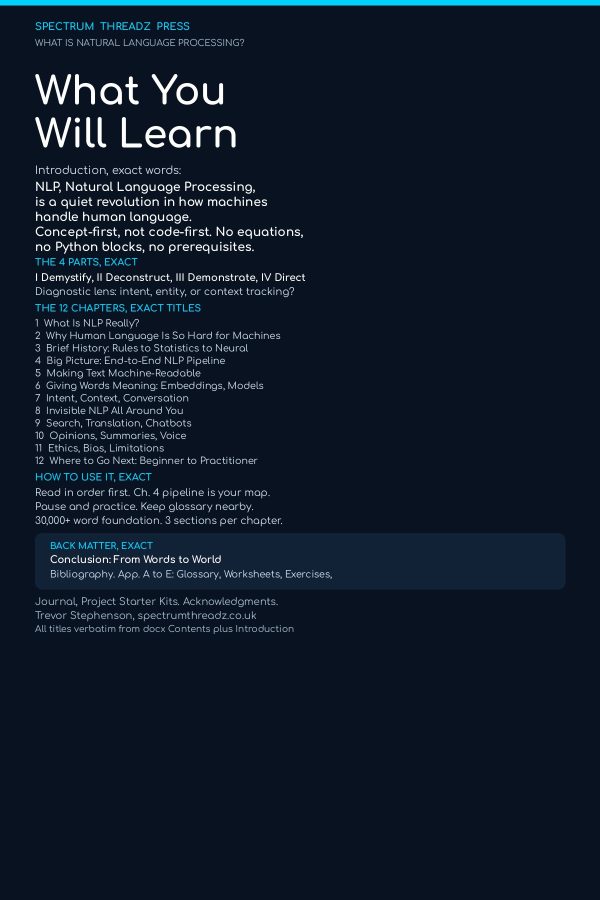
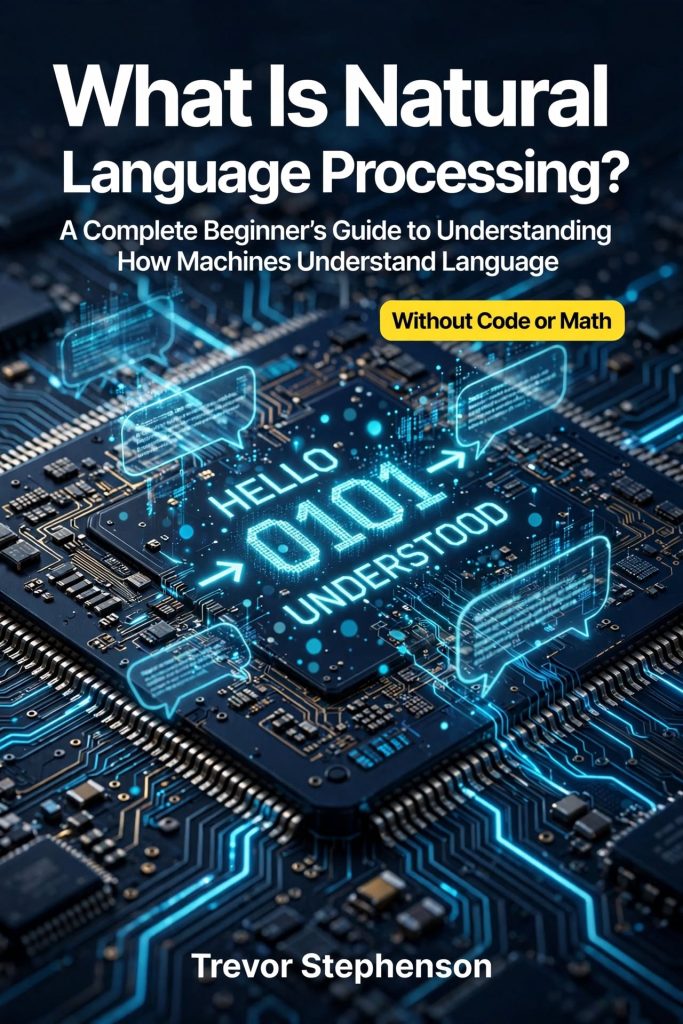
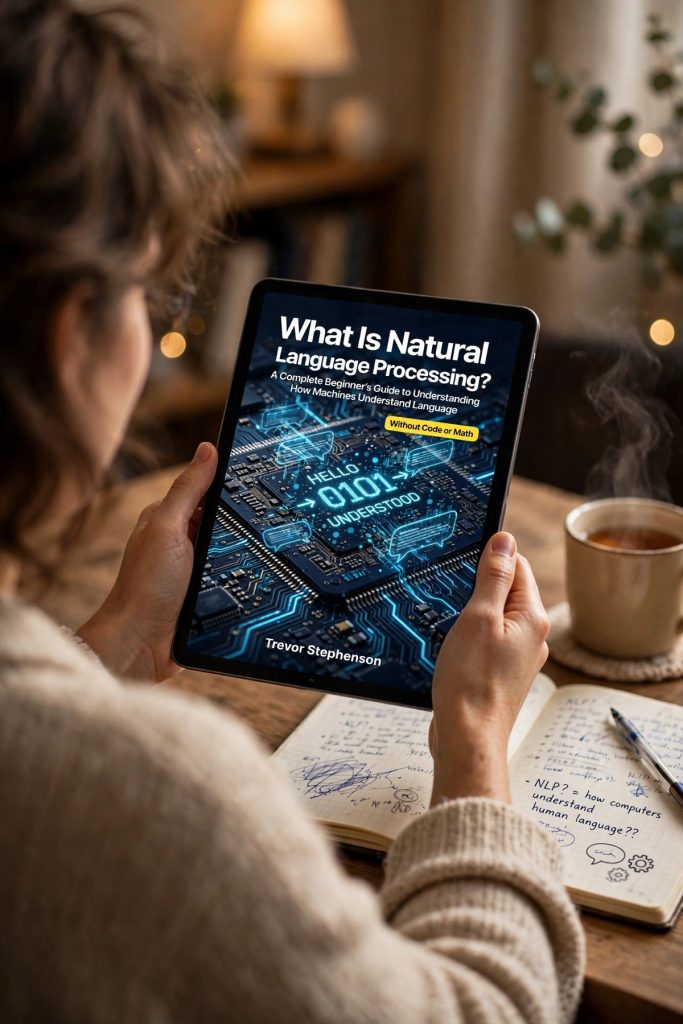
What Is Natural Language Processing? A Complete Beginner’s Guide to Understanding How Machines Understand Language Without Code or Math by Trevor Stephenson fixes that. It gives you a durable mental model in warm, plain UK English. No code. No maths. No prerequisites. One idea per paragraph, designed for neurodivergent minds.
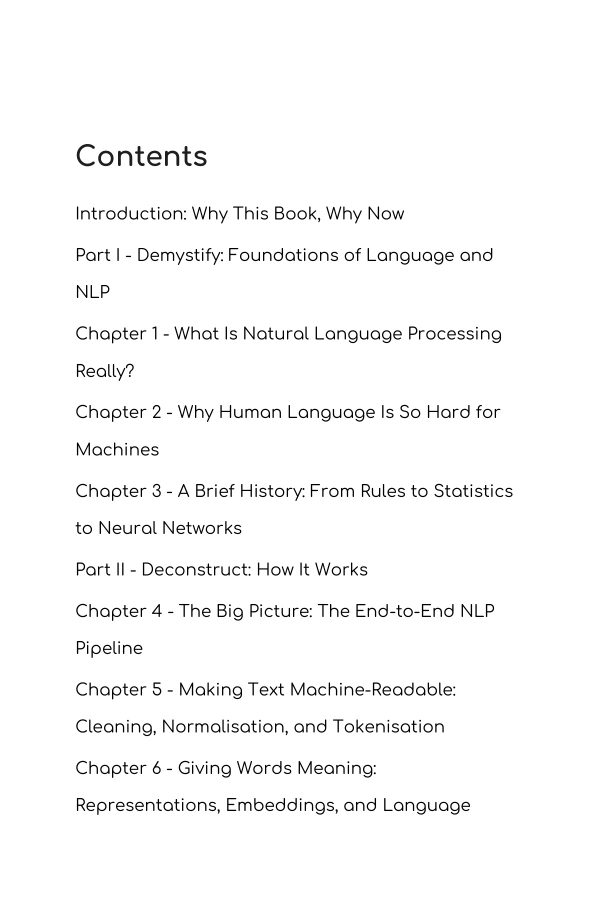
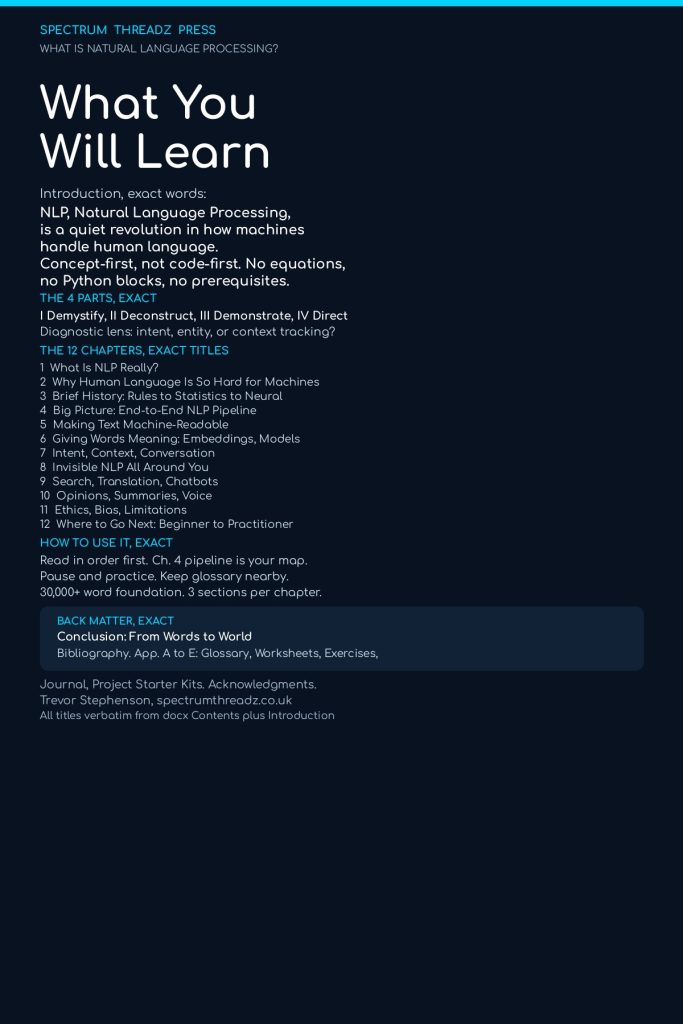
You will learn what NLP really is and is not in one sentence you can repeat to a friend. You will get the family picture that ends confusion forever: AI is the big goal of building intelligent systems, machine learning is one powerful way to learn from examples, NLP is AI focused on language, and linguistics is the scientific study of language itself. Once you see that picture, you will not get tangled again when terms are thrown around.
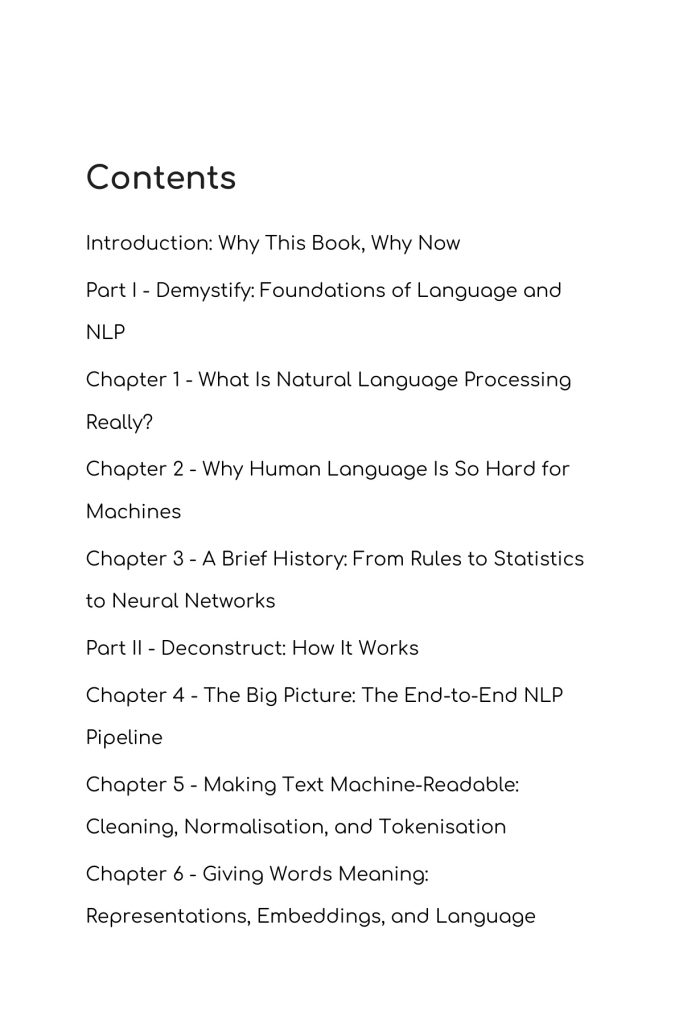
Why human language is hard for machines:
Ambiguity like “I saw her duck” and “bank” as money or river edge
Context like “feeling blue” does not mean turning blue
Sarcasm like “Oh great, another delayed flight” scored as negative despite the word great
Typos, emojis, messy real-world text, and why keeping “not” matters for sentiment
Why “to, two, too” confuses speech recognition and why overlapping speech breaks voice systems
The end-to-end pipeline from raw text to useful action:
Tokenisation as LEGO bricks snapping together to build meaning, so you can explain it to a 10-year-old
Embeddings as a meaning map where similar words are neighbours, so programmer and man being too close shows bias
A kitchen turning raw ingredients into a meal as your mental model for how NLP transforms text
Cleaning that matters: handling negations, emojis, typos and real inputs without losing meaning
Intent, entities and context: how “book a table for two tonight at 7” becomes intent = reservation plus entities = two people, today, 7pm, and why chatbots forget what you just said
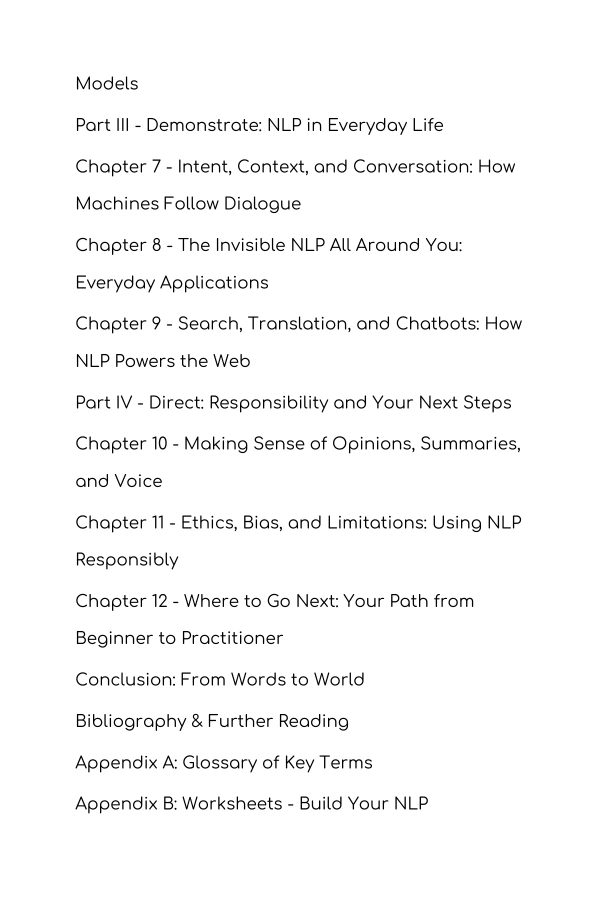
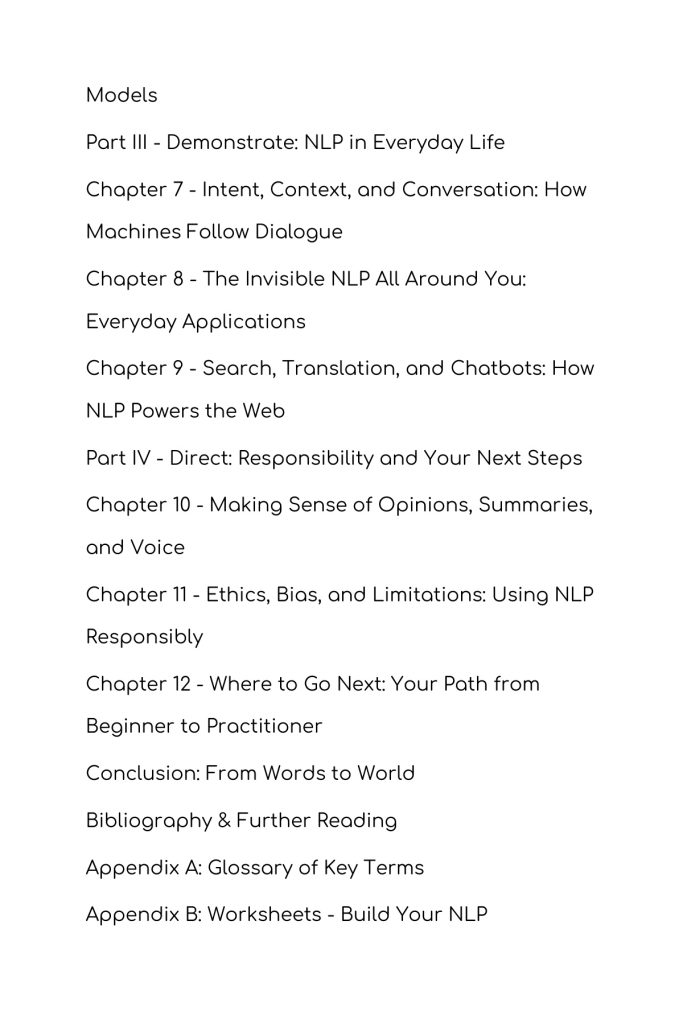
Everyday NLP you already use and visible power:
Invisible: autocorrect that predicts your next word, spam filters that learn, search intent that knows “restront neir me” means restaurants near me open now, voice assistants that understand mumbled timers even with kitchen noise
Visible: translation tools, chatbots, aspect-based sentiment analysis that finds food positive but service negative, extractive and abstractive summarisation, information extraction turning invoices into structured tables, voice to text with acoustic and language models and text to voice for accessibility
Real case studies showing NLP in action:
Support team: cuts manual review time from 20 hours weekly to 4 using aspect-based sentiment and summarisation, spotting service speed as top driver
TasteAnalytics restaurant chain: handles 2,000 reviews daily across Google, TripAdvisor, Instagram, keeps “not” for negation, flags sarcasm, builds executive summaries tailored for operations vs marketing, with human check for hallucination
HireFair hiring audit: trained on historical data where 80 percent of technical hires were men, learned to associate male names with hire, audit finds data bias overrepresenting American English and male language, model bias in embeddings, people bias with automation bias. Fix with balanced corpus, fairness metrics across groups, model cards documenting limitations, human-in-the-loop, data minimisation and GDPR delete rights. Callback disparity drops from 23 percent to 4 percent
What NLP still cannot do and how to stay responsible:
Data bias, model bias and people bias and how 70 percent he for doctor in data becomes 85 percent he predictions
Hallucination when models optimise for likely language not truth, and why you must verify factual claims from summaries against source
Overlapping speech, privacy with data minimisation, on-device versus cloud, opt-out and human oversight, appeal path and monitoring for drift as language evolves
Checklist for evaluating any vendor: training data, edge cases, intended use not for final decisions without human oversight, transparency report
How it is taught: Concept-first, not code-first. Short sections you can read in one sitting. One idea per paragraph. Skimmable headings. Real case studies, hands-on exercises to build your diagnostic lens, Important Information boxes for key takeaways and Warning boxes for limitations to avoid. Plain-English glossary, worksheets and curiosity journal habit to notice NLP in the wild every day.
Who it is for:
Complete beginners who have heard of ChatGPT but want a durable framework you can use for years
Career switchers moving into product, marketing, data or customer experience who need to talk confidently with technical colleagues and vendors
Student learners in business, humanities or technology who want a foundation that makes future technical learning easier
Non-technical decision makers evaluating whether a chatbot, search feature or sentiment dashboard makes sense for your team
Designed for neurodivergent minds by Spectrum Threadz Press. Expert nonfiction for ADHDers, autistic people and neurodivergent brains. Warm, direct, kind. Short sentences. Identity-affirming language. Research-respectful with brief mentions of evidence like a 2023 review found, no hype, no cure claims. Practically hopeful with something to try today. Written in UK English with organised, behaviour, realise. No em dashes, no walls of text, no US idioms, no sarcasm, no shame language.
Format: Instant digital download. ePub + PDF included in one purchase, beautifully formatted for calm, focused reading on any device – phone, tablet, Kindle app, laptop or desktop. Printable glossary and curiosity journal worksheet included. No physical shipping – download instantly after purchase and start today with one small exercise: notice NLP everywhere you already use it and ask about input, processing, understanding, generation, bias and privacy in that moment.

Reviews
There are no reviews yet.