




Buy On Google PlayGet Audiobook VersionRead Sample
Why do you second-guess conversations? You feel something is off, but you cannot name what.
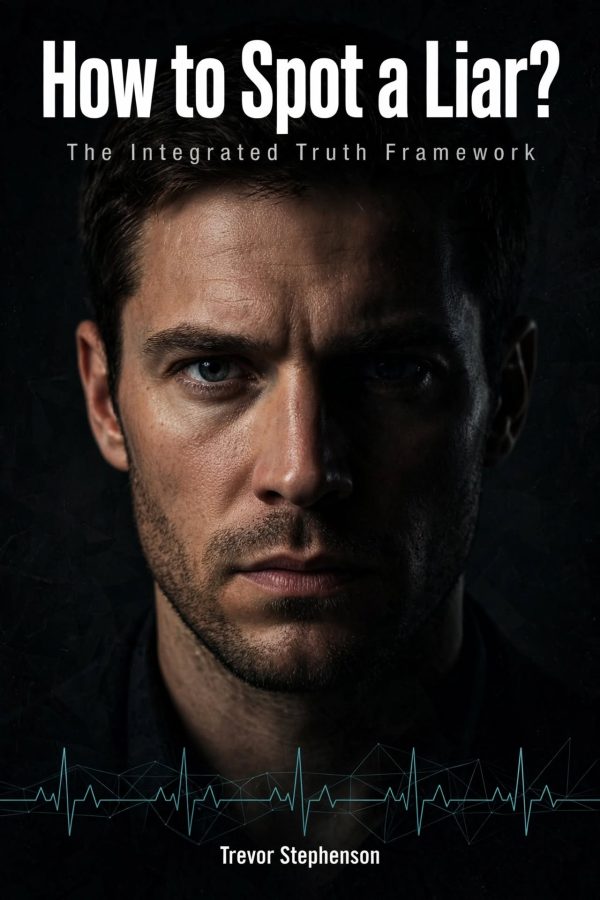
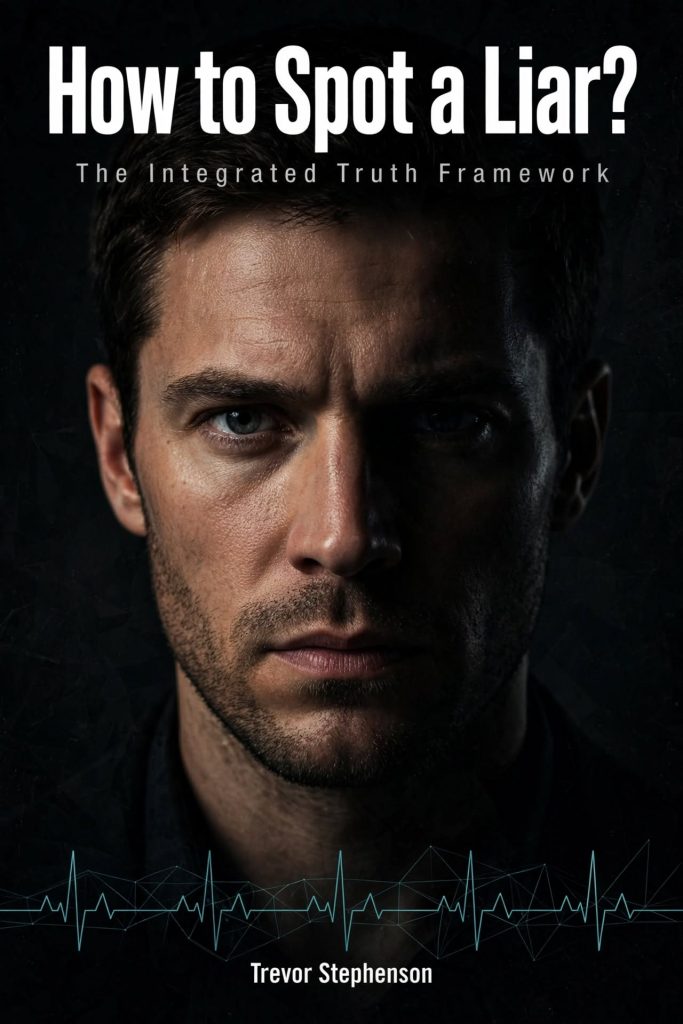
You either trust too quickly and get hurt, or you question everything and feel exhausted. How to Spot a Liar? The Integrated Truth Framework by Trevor Stephenson offers a third option that is calmer, kinder and more useful.
This is not a book of eye-flick myths, body-language tricks, or interrogation tactics. It is an ethical, conversation-based guide to everyday truth-seeking. It helps you improve clarity so you can make wiser decisions with kind boundaries.
Written for neurodivergent brains and helpful for everyone. Designed for ADHDer, autistic and neurodivergent minds, with warm, plain UK English, short sentences and one idea per paragraph.
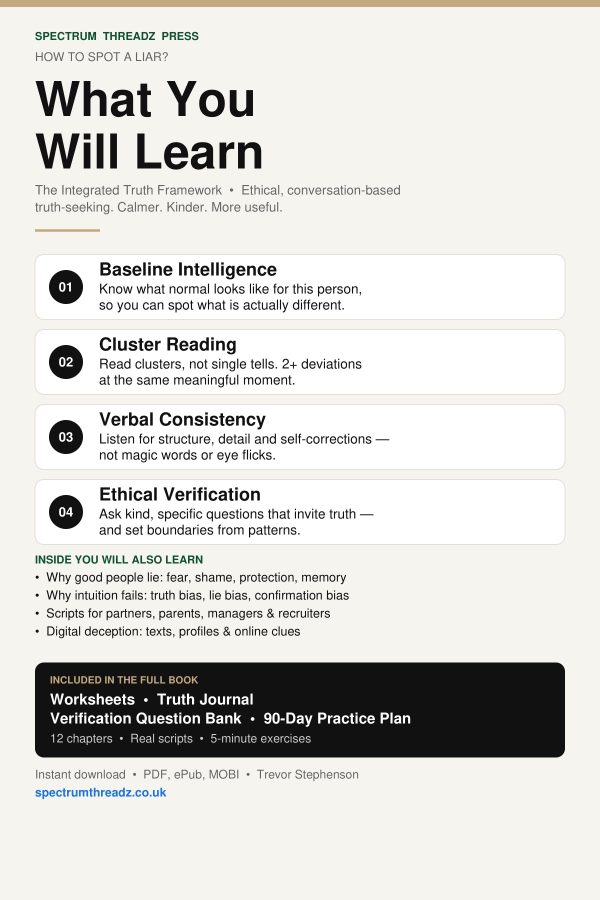
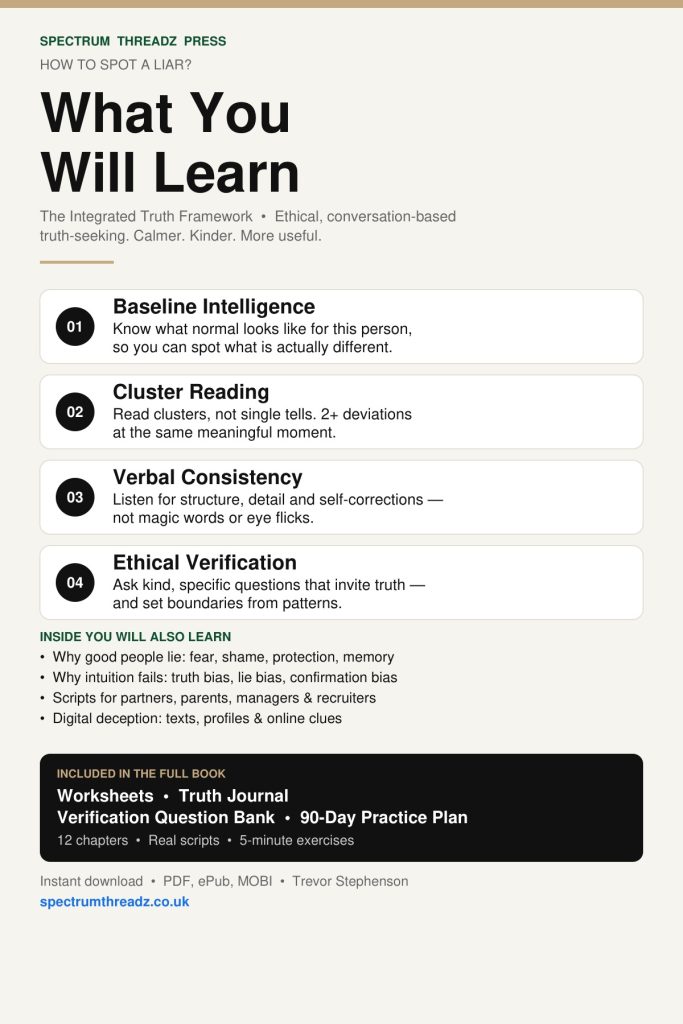
The Integrated Truth Framework – Four practical pillars you can try today:
Baseline Intelligence. You cannot spot a deviation if you do not know what normal looks like. Learn how to establish a quick, respectful baseline for any person in any conversation, so you notice what matters and ignore what does not.
Cluster Reading. One cue means nothing. A cluster means something is worth verifying. A cluster is two or more deviations from baseline across verbal, nonverbal and behavioural channels at the same meaningful moment. Read clusters, not single tells.
Verbal Consistency Analysis. Truthful stories include verifiable details, sensory information, irrelevant asides, complications and self-corrections. Fabricated stories are often too smooth, too vague, and low in verifiable detail. Learn to listen for structure, not magic words.
Ethical Verification and Boundary Setting. Use open-ended, specific, non-accusatory questions that invite truth and give honest people a clear path to be believed. Verify ethically and set boundaries based on patterns over time. No accusations. No games.
Inside you will find:
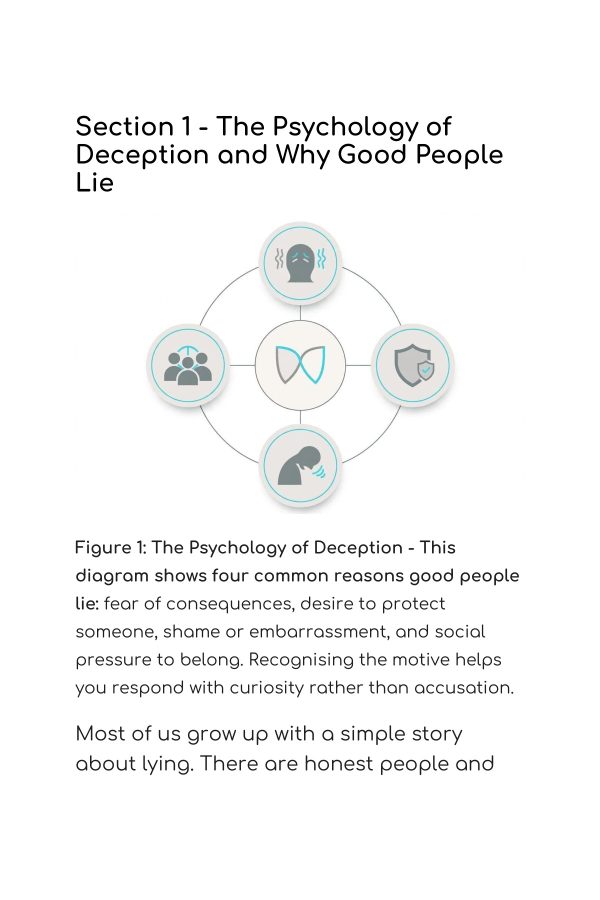
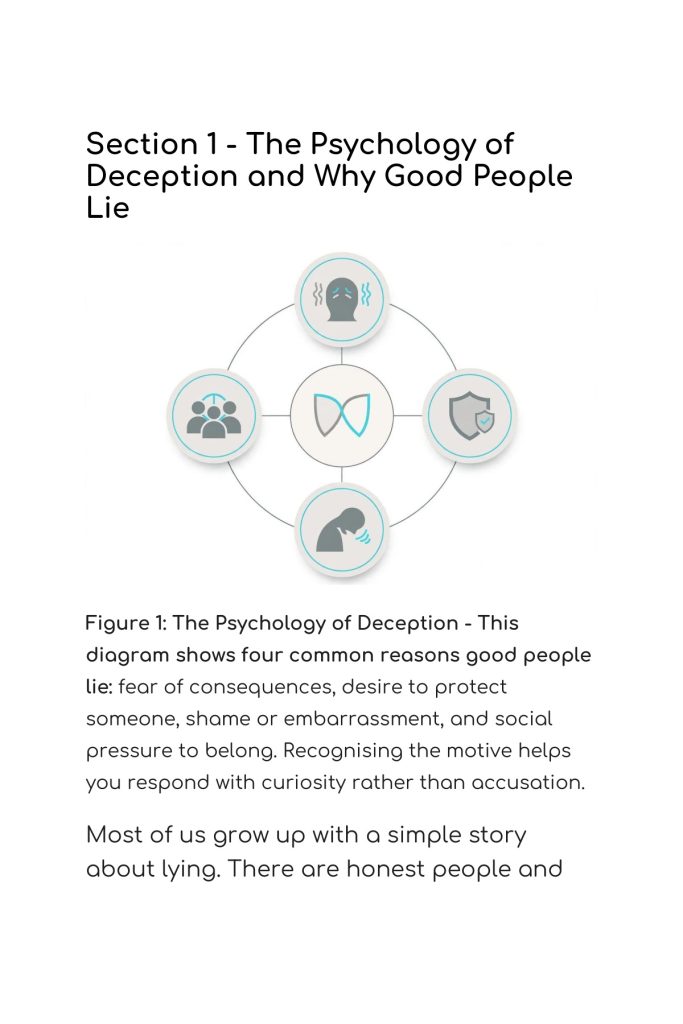
Why good people lie: fear of consequences, desire to protect others, shame, social pressure and faulty memory
Why intuition fails: truth bias, lie bias, confirmation bias, halo effect and cognitive load
How stress, culture, neurodivergence, fatigue, language and trauma affect behaviour, so you do not mislabel people unfairly
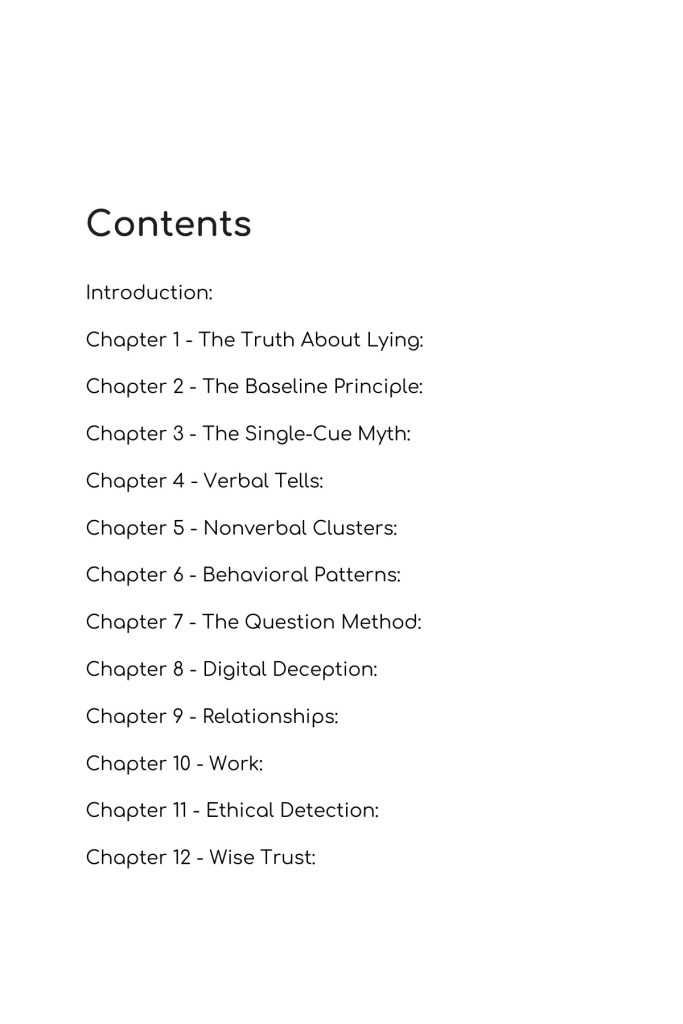
Five-minute exercises at the end of each chapter you can use in a real conversation
Worksheets, a truth journal, a verification question bank, and a 90-day practice plan that builds confidence gently
Real-world scripts for partners, parents, managers, recruiters, salespeople, and everyday chats
This is conversation-based, not accusation-based. It makes truth easier to tell and deception harder to maintain, while keeping relationships intact. It helps you protect your peace without becoming cynical.
Who this book is for: Partners, parents, managers, recruiters, entrepreneurs, and anyone who wants to trust more wisely. If you want to stop spiralling about vague replies and ask kind, specific questions that invite honesty, this is for you.
From Spectrum Threadz Press. Expert nonfiction designed for neurodivergent minds. Research-respectful, identity-affirming, practically hopeful. Every chapter ends with something you can try today. Instant digital download, beautifully formatted for any device, with organised, behaviour, realise throughout.
Try one exercise today and notice how much clearer your next conversation feels.
Reviews
There are no reviews yet.